How Long Does a New Roof Last in Youngtown?
The material sets the range, but the way the roof is put together decides where in that range your home ends up.
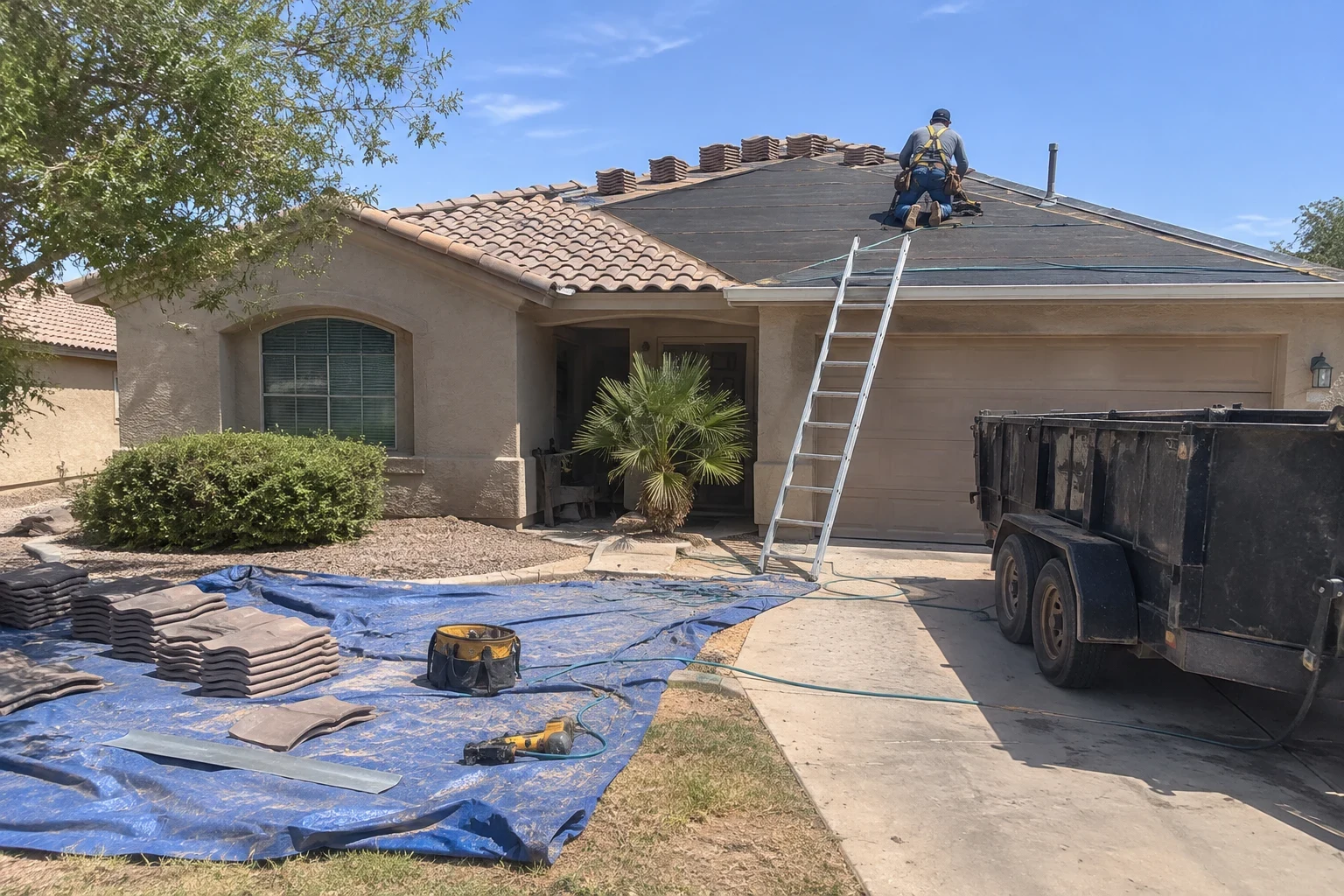
How long does a new roof last?
A new roof in Youngtown usually lasts anywhere from about 10 to 50 years, depending on the material and how carefully it was installed. Modified bitumen and built-up flat roofs sit at the shorter end, asphalt shingles a little longer, spray foam lands in the middle with recoating, and tile can go for decades if the underlayment holds.
How long does each roofing material last in desert heat?
Every material has a typical range, and the desert pushes most of them toward the lower half. Long stretches of summer heat and strong UV dry out asphalt, oils and coatings faster than they would in a milder climate. The numbers below are rough expectations for a roof that was installed well and looked after, not promises.
Notice that two of these depend on upkeep. A foam roof that gets its protective coating renewed on schedule can keep going for a long time. One that is left alone until the foam is exposed will not.
- Asphalt shingles: roughly 15 to 25 years, with lighter colors and good attic ventilation helping toward the upper end.
- Concrete or clay tile: the tiles themselves can last 50 years or more, but the underlayment under them often needs replacing somewhere around the 20 to 30 year mark.
- Spray foam: often 20 to 30 years or longer when the top coating is renewed every several years.
- Other flat roof systems such as modified bitumen or built-up roofing: commonly 10 to 20 years, depending on drainage and how much sun the surface takes.
Why does a tile roof need work if the tiles still look fine?
This is the question we hear most from neighbors with tile. The tile is mostly there to shade and shield. The layer that actually keeps water out of your home is the underlayment below it, and that layer bakes in attic-level heat for years.
As the underlayment ages it turns brittle, cracks at the folds and shrinks away from nail holes. Water that slips past a broken or shifted tile then finds a path into the deck. That is why a tile roof can look nearly new from the street and still leak during a summer monsoon storm.
When we do tile roofing, we usually lift the existing tile, replace the underlayment and flashing, and reset the good tile with new pieces where needed. You keep the look of your home and get a fresh waterproof layer underneath.
Which installation details add the most years?
Two roofs made from the same material can age very differently. The difference is usually in small things nobody sees once the job is finished, so these are the parts we slow down on.
- Flashing at walls, chimneys, vents and skylights, bent and sealed so water is turned outward rather than relying on caulk alone.
- Underlayment laps run in the right direction and overlapped enough that water can never run under a seam.
- Shingles nailed in the correct zone with the right number of fasteners, so they hold through gusty summer wind.
- Attic ventilation balanced between intake and exhaust, which keeps heat from cooking shingles and underlayment from below.
- Foam sprayed to an even thickness and sloped toward drains so water does not sit in low spots.
- Clean edges and drip edge that keep water off the fascia and away from the deck.
What shortens a roof's life around here?
Sun is the slow, steady wear. UV breaks down the top surface of shingles and coatings year after year, and south and west facing slopes usually show it first.
Water does the faster damage. On flat and low-slope roofs, ponding after a storm keeps a section wet long enough to soften seams and work into the deck. On pitched roofs, the trouble spots are valleys, flashing and any place where debris collects and holds moisture.
Foot traffic matters too. Walking on tile cracks it, and walking on foam without care can puncture the coating. If a technician for another trade needs to go up to work on an air conditioning unit or solar panels, it is worth asking them to step carefully.
How do you know it is time to replace rather than repair?
A single leak on a roof that is otherwise sound is usually a roof repair job. Replacement starts to make more sense when problems show up in several places at once or the roof is near the end of its typical range.
We give you a straight answer either way. If a repair will buy you good years, we will say so and explain what we would fix.
- Shingles losing granules, curling at the edges or cracking across the tabs.
- Several slipped or broken tiles, or leaks that keep coming back in different rooms.
- Foam with cracked coating, blistering or exposed brown foam.
- Soft spots in the deck or daylight visible from the attic.
- A roof that has reached the older end of its material's range.
More questions about roof lifespan
- Does roof color affect how long it lasts?
- It can. Lighter shingles and reflective foam coatings absorb less heat, which slows the drying and aging of the materials and can help keep the attic cooler.
- Can a new roof go over the old one?
- Sometimes code allows a single layer of shingles over an existing layer, but we usually recommend a full tear-off. Removing the old roof lets us see and fix the deck, and the new roof is not trapping old heat and moisture underneath it.
- How long does it take to install a new roof?
- Most single-family homes take a few working days, depending on size, material and how much deck repair turns up once the old roof is off. We explain the expected schedule before work starts and clean up each day.
- Will regular upkeep really make a difference?
- Yes, especially on foam and flat roofs. Recoating foam on schedule, keeping drains clear and replacing a cracked tile early all prevent small issues from turning into deck damage.
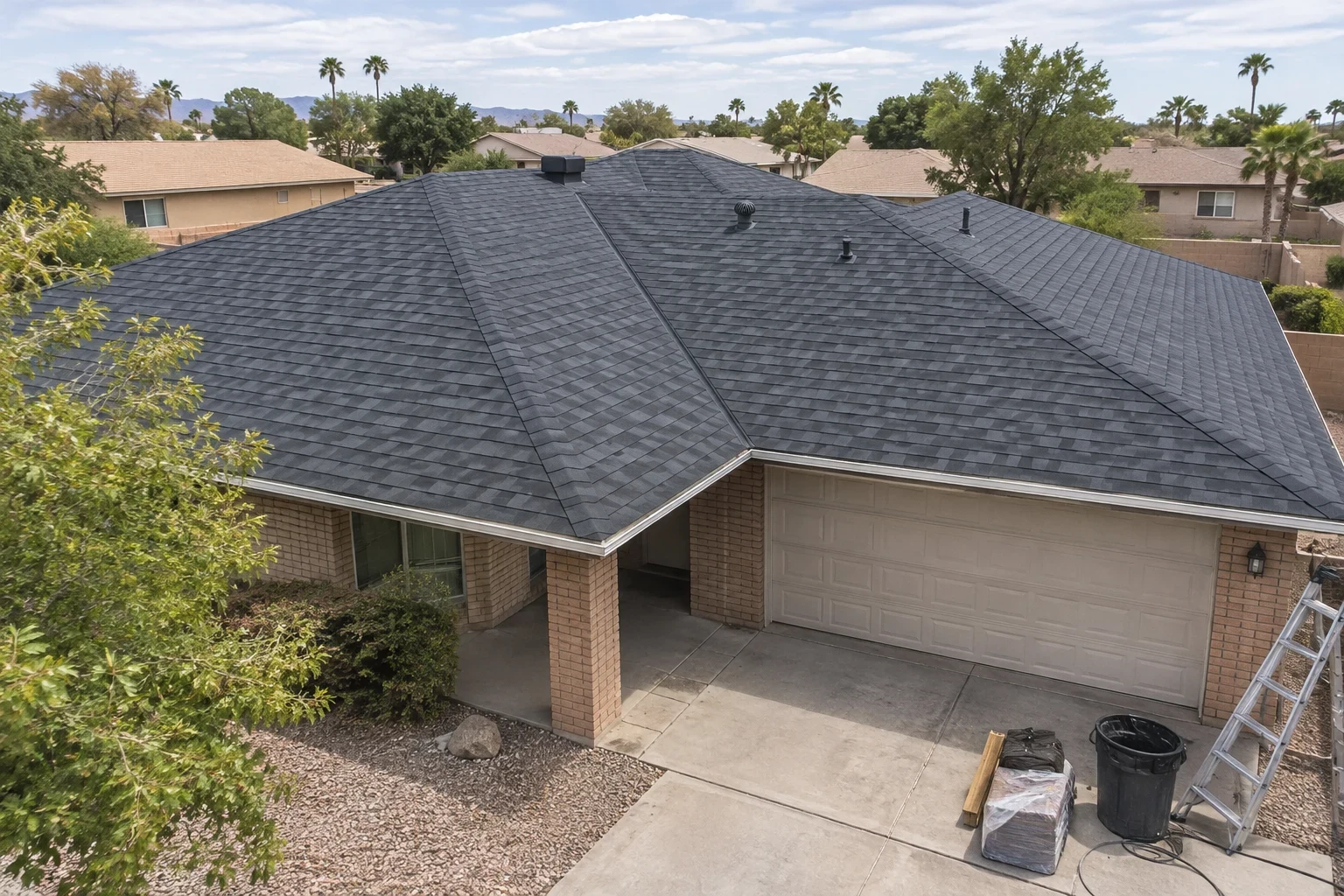
Wondering how many good years your roof has left?
Give us a call and tell us what material you have, roughly how old it is and what you are noticing. We will talk through whether repair or replacement makes sense and how we would build the new roof, and you can get your quote by phone.