ServicesTile Roofing
Tile Roofing in Youngtown
Your tile can outlast the house, but the layer underneath does the real waterproofing. We lift and relay tile, replace worn underlayment and rebuild the flashing details that decide whether your home stays dry through monsoon season.
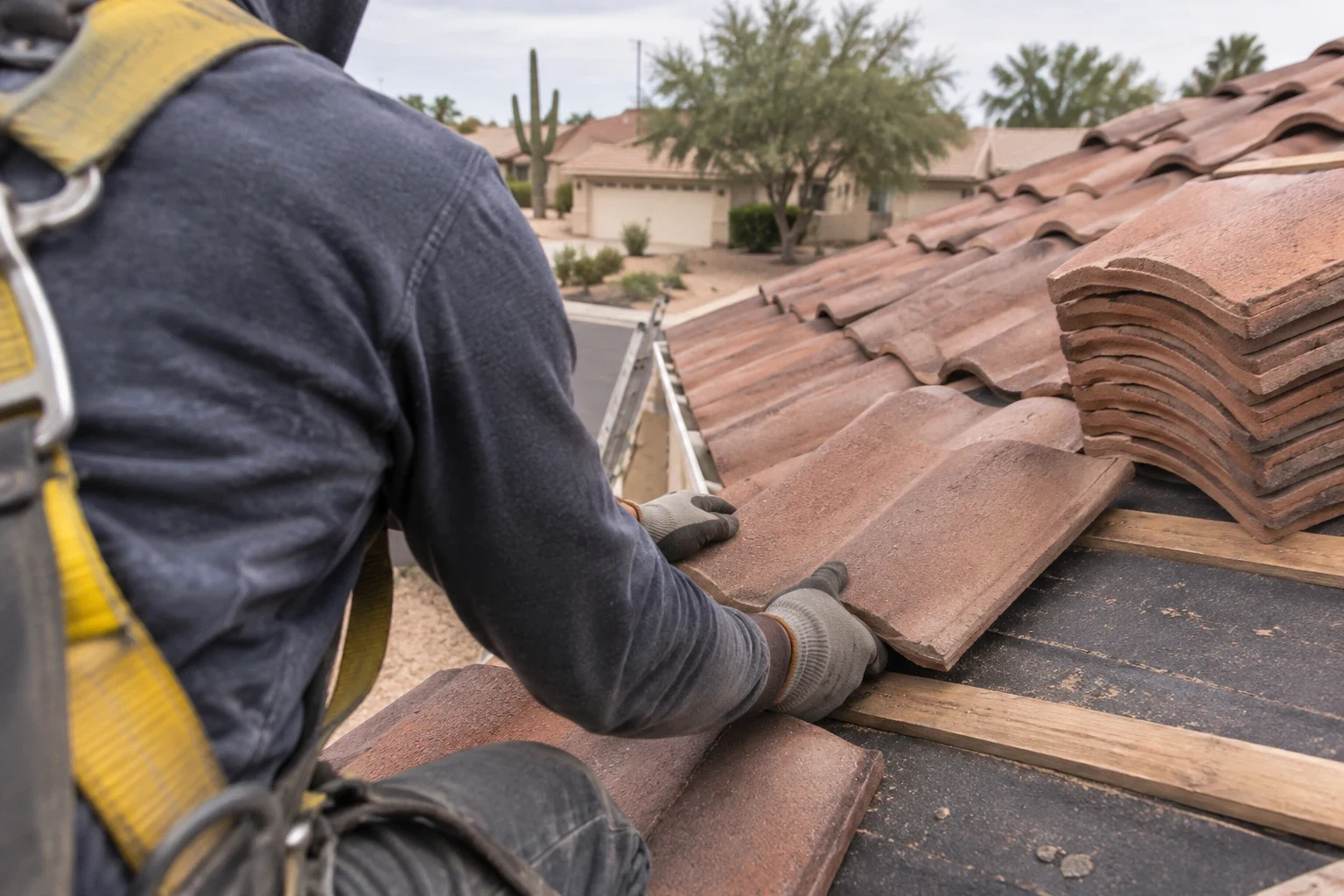
The tile is rarely what leaks
Concrete and clay tile shed most of the water and shade the roof from sun. The underlayment beneath them keeps out the rest. Years of attic heat and UV slowly dry that layer until it cracks, and once it does, wind-driven rain finds its way to the deck even though the tile above looks perfect.
That is why most tile work is not about the tile. We carefully lift your existing tile, stack it on the roof, put down new underlayment and flashing, then set the tile back in place. Good tile is reused, broken pieces are replaced with a matching profile, and you keep the look of your home.
We are an Arizona KB-2 licensed contractor, and tile is detail work. The bird stops at the eaves, the metal in the valleys and the way each pipe is flashed matter more to how long the roof lasts than anything you see from the street.
What our tile roofing work includes
- Lift and relay
- We remove the tile by hand, stack it evenly across the roof so the framing is not overloaded, and set it back once the new layers are down. Most homes reuse the majority of their original tile.
- New underlayment
- Old felt comes off down to the deck. New underlayment goes on lapped in the right direction so water always runs over a seam, never into it.
- Battens and fasteners
- Rotted or split battens get replaced, and tile is fastened to current code so it stays put in high summer winds.
- Valley and penetration flashing
- Valleys get new metal, and every vent, pipe and skylight gets proper pan or lead flashing. These are the spots where most tile roofs fail first.
- Eave bird stops and ridge work
- We close the open ends at the eaves so birds and debris stay out, and we reset hip and ridge tiles where old mortar has cracked loose.
Signs your tile roof needs attention
Water marks on the ceiling
A stain that appears or grows after a hard summer storm usually points to worn underlayment above it. The tile over that spot can look completely intact.
Broken or shifted tile
Installers for dishes and solar panels often crack tile when they walk on it. When a tile slides out of place, the sun hits the underlayment directly and wears it out quickly.
Felt that flakes at the edges
Look at the underlayment where it shows along the eaves. If it breaks apart in your fingers, the layer across the rest of the roof is probably just as worn.
Cracked mortar on hips and ridges
When the mortar along the top lines of the roof starts to crumble, water can get in at the highest point and run down inside.
An aging roof that still has its first underlayment
A tile roof around twenty years old or more that has never had new underlayment is a good candidate for a planned reset, done on your schedule instead of after a leak.
What moves the cost of tile work
Every tile roof prices differently, and we would rather explain why than give you a number that changes later. Your estimate lists each item so nothing shows up as a surprise. These are the things that move it most.
Roof size and pitch
More square footage means more underlayment and more tile to handle. Steeper roofs take extra safety setup and slower handling.
Replacement tile
Some breakage is normal when tile is lifted. Common profiles are easy to match; older or discontinued colors may need salvaged tile, which takes more searching.
Deck condition
Soft or water-damaged decking found under the old felt has to be replaced before new underlayment goes down.
Flashing details and permits
A roof with many vents, skylights or valleys takes more metalwork. Permit requirements for the job are included in the estimate.
How a tile job runs
- 1
We check under the tile
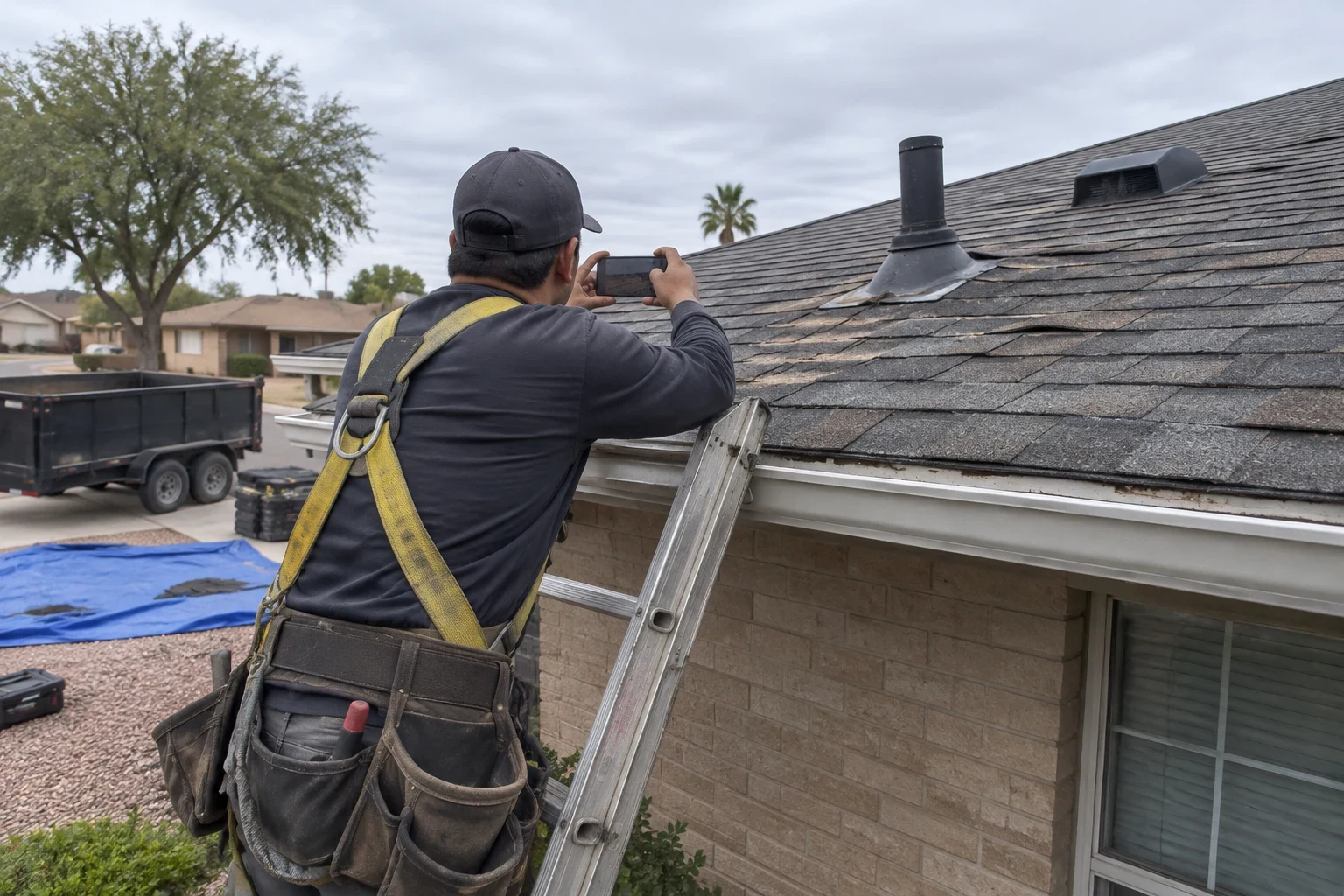
We get up on the roof, raise a handful of tiles along the eaves and in the valleys, and take pictures of the underlayment and flashing. You see exactly what we saw.
- 2
You get it in writing
Our estimate breaks out underlayment, flashing, replacement tile and any deck repair as separate lines. It also gives you a straight answer on whether a repair will do or a full reset is the smarter move.
- 3
Working on your roof
Plants and walkways get covered before we start. We lift and stack the tile, tear off the old layers and inspect the deck underneath. We only open as much roof as we can close up with new underlayment, battens and flashing that same day, so your home is covered every night of the job.
- 4
Tile back on and the yard cleared
Your tile returns in its original pattern, cracked pieces are replaced with matches, and the ridges are set again. Before we leave, we pick up the scraps, sweep the yard with a magnetic roller to catch loose nails, and show you the finished roof.
Tile roofing questions
Will my current tile go back on the roof?
Usually it will. Concrete and clay tile tend to last through more than one underlayment cycle. We lift each piece by hand, pull out any that are cracked, and only replace the ones that cannot be reused.
How do I know if I need a reset or a whole new roof?
When the tile is in good shape and the trouble is in the layers below it, lifting and relaying the tile is normally the better choice. If the tile is breaking down or the framing needs attention, we will explain why roof replacement makes more sense and show you the photos that point that way.
My tile color has been discontinued. What happens then?
We start by searching for the same profile and color. If it cannot be found, we borrow original tile from a back or side slope and move it to the front of your home. The closest available match then goes on the slope that is hardest to see from the street.
Does your tile work carry a warranty?
Yes. Every tile job we finish comes with a 10-year labor warranty. Before the first tile is lifted, we sit down with you and explain exactly which parts of the work it applies to.
Which areas do you serve for tile work?
Along with Youngtown, we take on tile jobs in Sun City, Sun City West, El Mirage, Peoria and Surprise.
Find out how your tile roof is really holding up
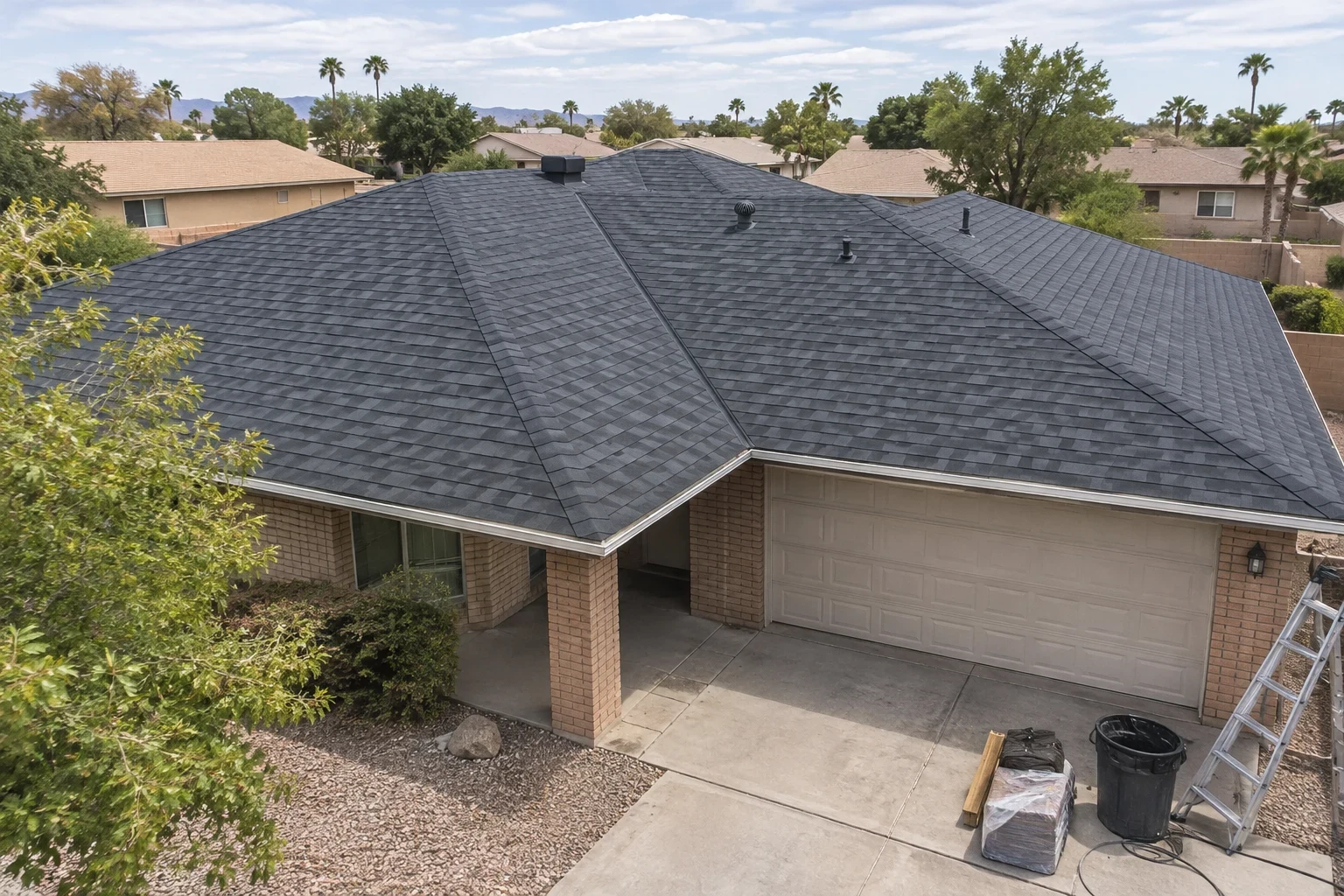
Give us a rough age for the roof and describe any stains, cracked pieces or loose ridges you have noticed. We will arrange a visit, check the layers under the tile and put our findings in a written estimate you can read line by line.