ServicesFoam Roofing
Foam Roofing in Youngtown
We spray, slope and coat foam roofs on flat and low-slope homes so water runs off instead of sitting. The foam goes down as one continuous layer with no seams, and the coating on top keeps the sun from wearing it away. We take care with both.
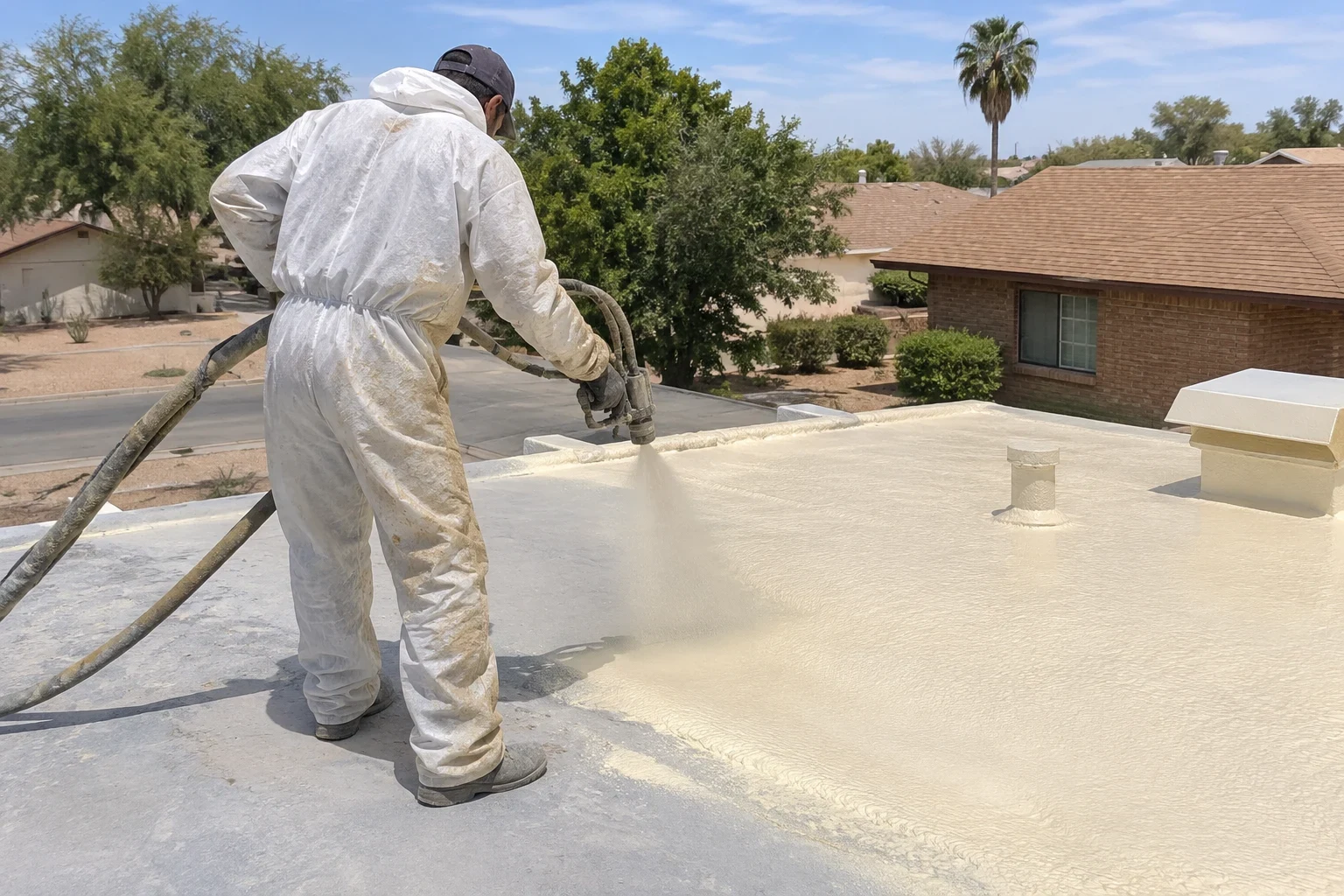
What a foam roof does for a flat roof
Spray polyurethane foam starts as two liquids that mix at the spray gun and expand into a firm, closed-cell layer. It bonds to the deck, wraps around vents and pipes, and forms one piece across the whole roof. On a flat or low-slope home, that means no laps or seams for water to find.
Foam also adds insulation on top of the deck, which helps keep the rooms under a flat roof cooler through a long Arizona summer. The tradeoff is that bare foam breaks down in sunlight, so the coating is never optional. Most of what decides whether a foam roof lasts happens in details you won't see from the yard: how dry the surface was, how thick the foam went on and how much coating covers it.
Foam is the right call when a flat roof keeps leaking at the seams, when water sits for days after a heavy rain, or when an older foam roof needs fresh coating. If your roof is pitched, our tile roofing or shingle roofing pages are a better place to start.
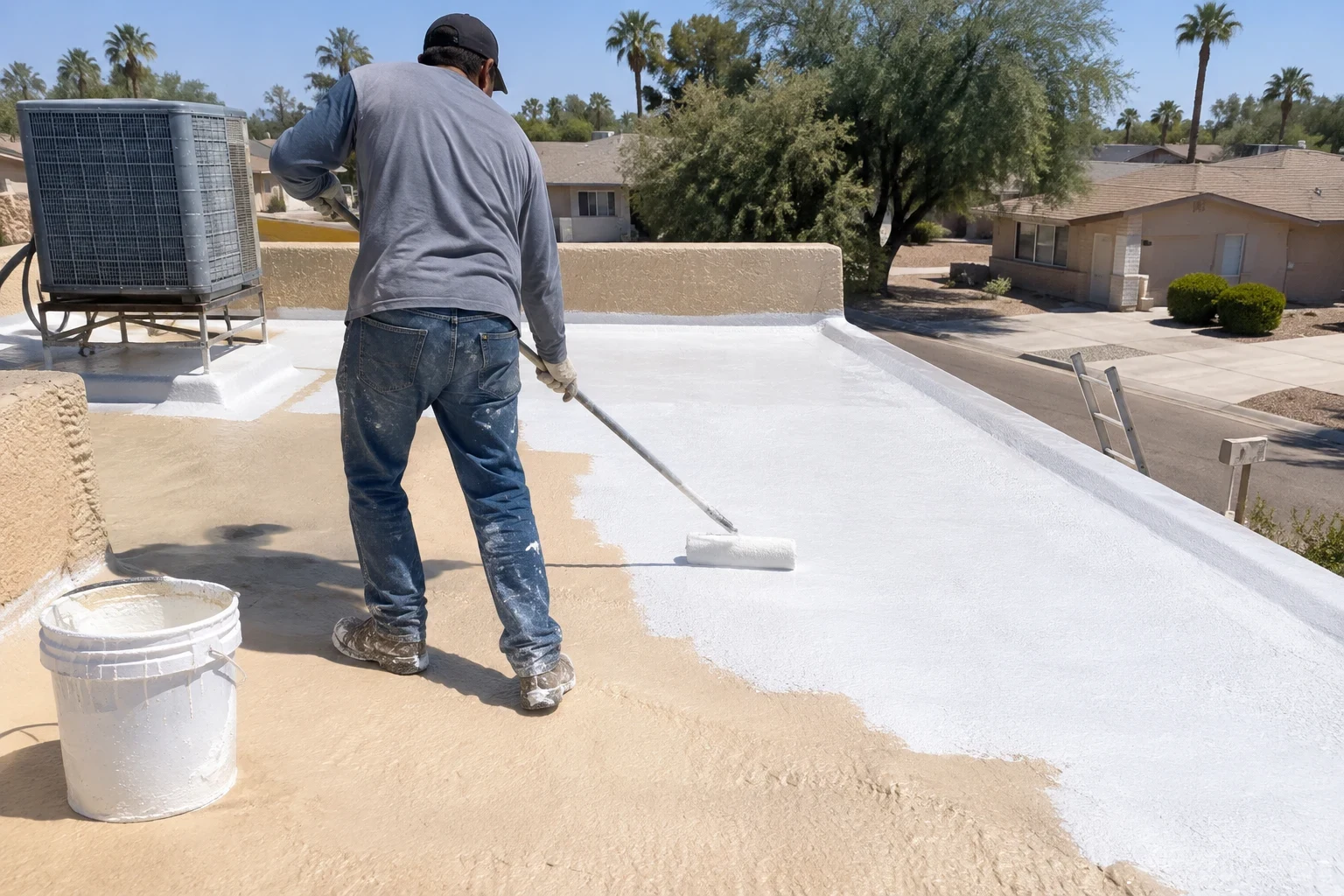
What our foam roofing work includes
- 01
Surface prep foam can grip
We remove loose gravel, failed coating and any wet or rotted material, then clean the deck. Foam sprayed over dust or moisture lets go later, so we find the wet spots before anything is sprayed.
- 02
Foam built up to drain
We add extra foam in low areas to push water toward the scuppers and drains. A roof that drains doesn't hold the standing water that shortens coating life.
- 03
Careful edges and penetrations
Foam is carried up parapet walls, over roof edges and around AC stands, vent pipes and skylight curbs. These are where most flat roof leaks start, so this is where we slow down.
- 04
Coating at the right thickness
We apply the elastomeric coating in more than one coat, crossing directions, and check the thickness as we go. Embedded granules can be added for foot traffic and extra sun protection.
- 05
Recoating existing foam
If your foam is sound but the coating is chalky or worn thin, we clean it, fix damaged spots and recoat. It is often the least expensive way to add years to a foam roof.
- 06
Overspray protection and cleanup
We cover cars, windows, walls and the AC condenser, and we watch the wind the whole time we spray. Debris is hauled away before we leave.
Questions about Foam Roofing?
Call(623) 303-9192Signs your roof is ready for foam or a recoat
Bare foam showing through
When the coating wears off, the foam underneath turns dark and powdery in the sun. A recoat now stops it from eroding further.
Water that sits for days
Ponding after rain means the roof isn't sloped to drain. Foam can be built up to correct the low spots.
Blisters or soft spots
A bubble, or a spot that gives underfoot, can mean moisture got under the foam. We cut it out, let the area dry and patch it with new foam and coating.
Small pits and holes
Birds sometimes peck at foam and leave holes that let water in. They are simple to fix while they're small.
Splitting seams on an old flat roof
Rolled and torch-down roofing usually fail at the laps. Foam covers the surface in one piece, so there are no laps left to open.
Your foam roof, step by step
- 1
A close look before any spraying
Our first visit is spent on your roof checking for damp spots and watching where water would flow. You'll hear plainly whether a recoat, a repair or a full foam roof makes sense, and you'll get a written estimate broken into line items.
- 2
Getting the surface ready
We clear away whatever has to go, clean the deck and mask off everything below the roof edge. Shutting off sprinklers near the house that morning keeps the surface dry, which foam needs to bond.
- 3
Spraying in calm, dry conditions
Foam goes on only when the deck is dry and the air is still. During summer we often begin at sunrise, ahead of the heat and the afternoon breeze. We build it up in passes and add thickness in low areas so rain heads for the drains.
- 4
Coating, final check and cleanup
The coating is laid on in several layers, either the same day or the next morning. Then we go over the finished roof with you, inspect each edge and penetration, and haul away the debris.
What decides the cost of your foam roof
Foam work is measured by the square foot, but the area is only the starting point. What sits under the current surface and how much foam it takes to get water moving toward the drains change the total more than size alone. We don't put a number on it until we've been up on your roof, and your written estimate shows each line so nothing is a mystery.
- A recoat versus a new foam roof
- Cleaning and recoating foam that is still sound runs well below spraying a full new roof. We'll give you a straight answer about which one your roof actually needs.
- What has to come off first
- Old gravel, soaked insulation or soft decking must be removed before any foam goes down. More tear-off means more hours on the job.
- Extra foam for slope
- Low spots need added foam so water drains instead of pooling. That added thickness also gives the rooms below more insulation.
- Which coating goes on top
- Silicone usually costs more than acrylic and stands up better where water tends to collect. Granules raise the price slightly but toughen the surface along the paths you walk.
- Parapets and rooftop equipment
- Every AC stand, skylight curb, vent pipe and parapet wall is detailed by hand. A busy roof takes longer than an open one.
Questions about foam roofing
How long does a foam roof last?
Its life depends mostly on the coating. Foam that stays covered and gets recoated when the coating wears thin can serve for many years, while foam left bare in the sun starts breaking down within a few seasons. When we're on your roof, we'll tell you how your coating looks and roughly when it will need attention.
Can you spray foam over my old roof?
Often we can. The old surface needs to be completely dry and still bonded tight to the deck underneath. Anything damp or lifting gets cut out before we spray. Covering trapped moisture with foam only hides the problem under a new layer, so we check first.
Will overspray get on my car or house?
Before we spray, we cover windows, walls, vehicles and any equipment close to the roof. Wind is what carries overspray, so we pause when it picks up. Parking your cars down the street that day adds one more layer of protection.
Can I walk on a foam roof?
Yes. Cured foam is firm enough for everyday foot traffic, such as a technician servicing your AC. Granules in the coating add wear resistance along common paths, though sharp tools and heavy items are best kept off it.
Is your foam roofing work backed?
It is. Roofing Youngtown is an Arizona KB-2 licensed contractor, and every foam roof we spray carries a 10-year labor warranty. Ask us about the details while we review your estimate together, and we'll explain exactly what it includes.
Let's talk about your flat roof
Tell us what you're seeing up there, and we'll explain whether it needs a recoat, repairs or new foam. We work in Youngtown, Sun City, El Mirage and nearby towns.