ServicesNew Roof Installation
New Roof Installation in Youngtown, AZ
Building a home, adding a room or finishing a casita? We install the roof from the bare deck up, sweating the small details like flashing, fastening and airflow that decide whether it lasts decades or starts leaking in a few summers.
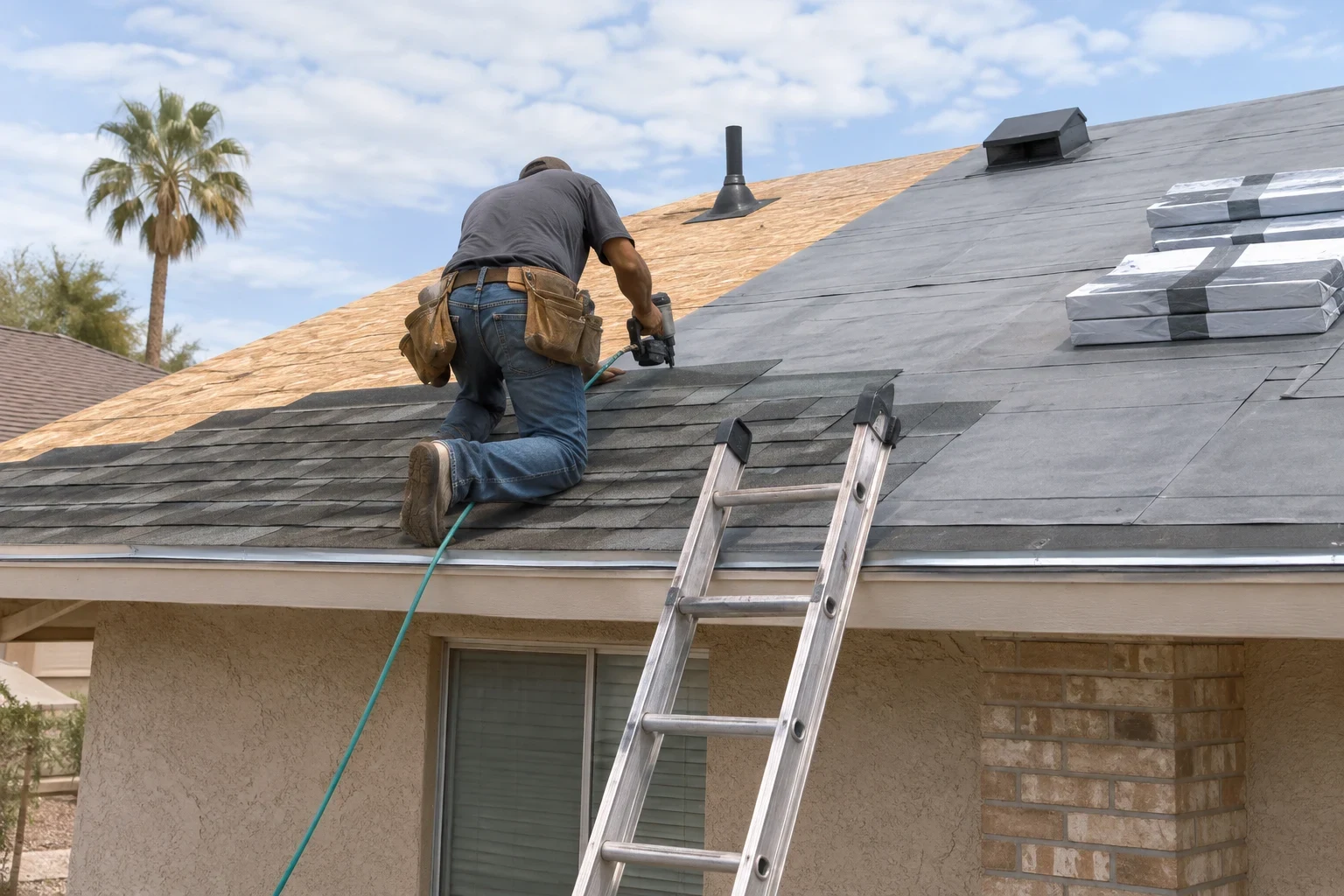
A roof built for the structure underneath it
A new roof installation goes on a structure that has never had a roof, or on fresh framing after a remodel. That includes new homes, room additions, detached garages, casitas and enclosed patios. There is no old material to strip, which means every layer is ours from the first sheet of underlayment to the last ridge cap.
That clean start is a real advantage, and we treat it that way. We match the roof to the pitch your builder framed, whether that calls for tile, shingles or a foam system on a low-slope section, and we tie the new roof neatly into any existing roofline so the joint does not become the weak spot.
We are an Arizona KB-2 licensed contractor, and our installation work is backed by a 10-year labor warranty. If you are replacing a worn-out roof on an existing house instead, our Roof Replacement page covers that work.
What goes into every new roof we install
- Deck check before anything covers it
- Before the first layer goes down, we walk the sheathing and check nail spacing, panel gaps and edges. Any soft spot or missing clip gets pointed out to you and your builder while it is still a quick fix.
- Underlayment rated for heat
- A roof surface in the West Valley gets far hotter than the summer air around it. We choose underlayment built to take that heat without drying out and cracking early, which counts most under tile.
- Flashing at every wall, pipe and valley
- Step flashing, counterflashing, pipe boots and valley metal are the spots where new roofs tend to fail first. Each piece is cut and lapped by hand so water always runs down and away, never back toward a seam.
- Airflow matched to your attic
- We work out how much fresh air needs to come in low and how much hot air needs to leave up high, then place vents to suit the space. Steady airflow keeps the underlayment, the decking and your cooling bill in better shape.
- Fastening to the manufacturer's pattern
- Shingles, tile and battens each come with set nail counts and placement. We follow them on every course, because a skipped fastener looks fine on day one and shows itself after a monsoon gust.
- Cleanup and a final walk with you
- We run a magnet over the yard for nails, haul away scraps and walk the finished roof with you so you see the work before we pack up.
When a new roof installation is the right call
Your new home is framed and waiting
The walls and trusses are up, and your builder needs a roofer who shows up on schedule and leaves clean details for the trades that follow.
An addition needs to join the old roof
A room addition has to meet your existing roof without a mismatched hump or a seam that leaks. That joint is exactly where careful flashing pays off.
A garage, casita or workshop is going up
A smaller building deserves the same underlayment and flashing care as the main house. Corners cut on outbuildings tend to turn into stained ceilings a few years down the road.
A patio is being enclosed
Turning an open patio into a room often means a new low-slope roof overhead. We can tell you whether foam or another flat roofing system suits the pitch you have.
What shapes the price of a new roof
Every new roof gets priced from its own plans and measurements, so we will not guess at a number over the phone. What we can do is walk you through what pushes the cost up or down. That way the written estimate makes sense when it lands in your hands.
Square footage and slope
More roof means more material and a longer stretch of labor. A steep pitch adds time as well, since the crew has to set up safe footing and work each course more carefully.
The covering you pick
Concrete tile, clay tile, architectural shingles and foam systems differ in material cost and in how long they take to install. Tile also needs battens and a heavier underlayment beneath it.
How many angles the roof has
Each valley, dormer, skylight and wall junction needs its own flashing. A plain gable goes on quickly, while a cut-up roofline takes more hand work.
Joining an older roof
An addition that meets your existing roof needs transition work, and once in a while a strip of the old roof has to be opened up to make the joint right.
Permits and the build schedule
Permit fees vary from city to city, and a tight builder timeline can change how we plan crews. Both appear as their own lines on the estimate, so nothing catches you off guard later.
How a new roof installation runs
- 1
A phone conversation first
You tell us what is going up, the roof style you have in mind and when you need it. We ask about pitch, plans and any existing roof the new section will meet.
- 2
Site visit and written estimate
We look at the framing or the plans in person, then hand you a written, line-item estimate. Materials, ventilation and flashing each get their own line instead of one lump number.
- 3
Permit and scheduling
We pull the roofing permit with the city and pick dates that work with your builder. In summer we start early in the morning so the crew and the materials avoid the worst of the heat.
- 4
Installation day by day
Underlayment and edge metal go down first, followed by flashing, the roof covering, and finally ridge and vents. We keep the site picked up as we work and shield walls, windows and landscaping below.
- 5
Walk-through after the final inspection
When the city approves the permit, we go over the finished roof together. We hand you your warranty paperwork, show you what it covers and answer anything you still want to ask.
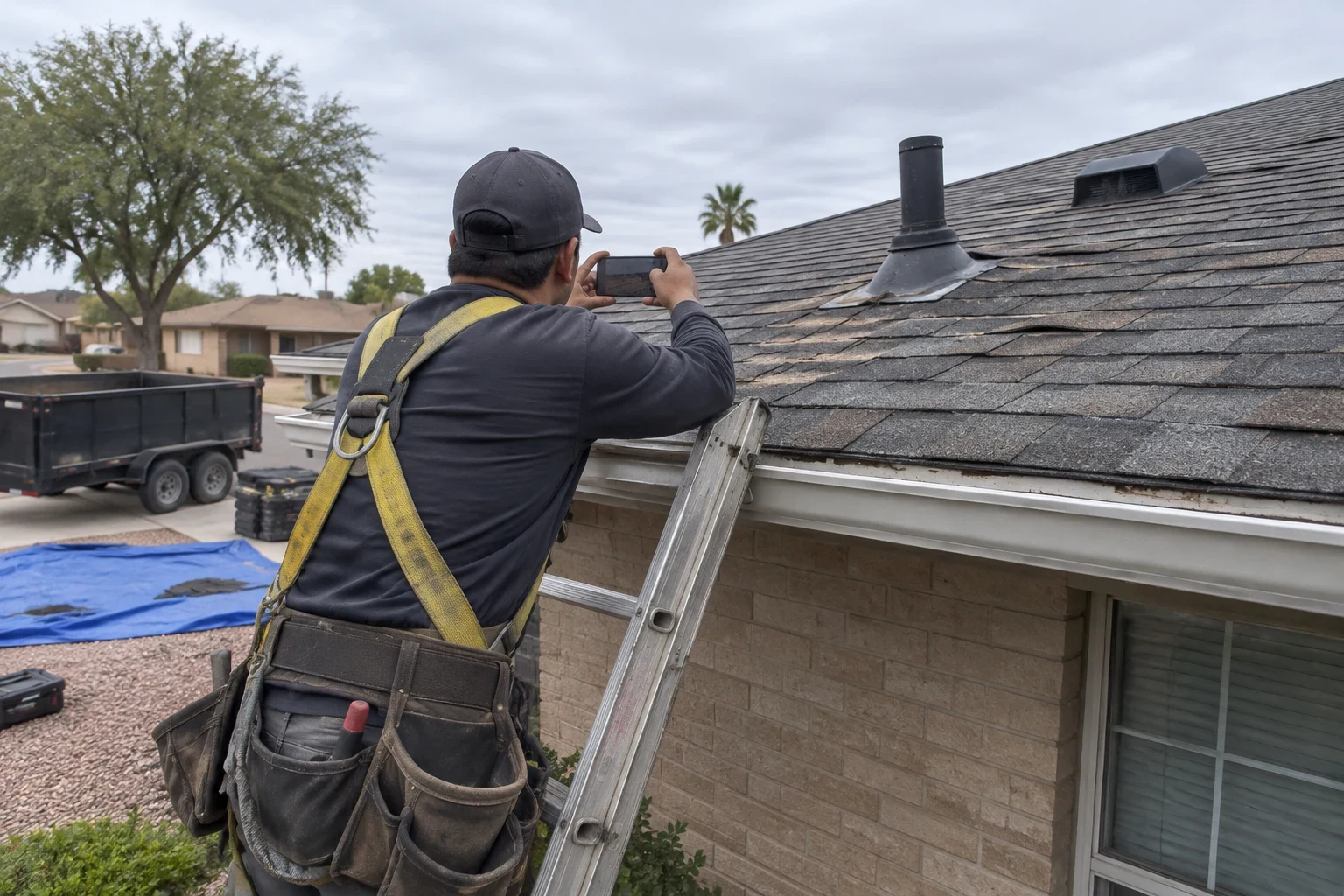
Questions about new roof installation
How is new roof installation different from roof replacement?
A new installation goes onto framing that has never carried a roof, such as a new home, an addition or a casita. A replacement begins with tearing an old roof off. The flashing and fastening standards are the same either way, but the planning and the pricing are not.
Can you match my addition to my existing roof?
Usually, yes. We look at the material, color and profile already on your home and track down the closest match available. With older tile an exact match is sometimes out of reach, and we will say so plainly before any work begins.
Which roofing material should I choose for a new build?
That comes down to the pitch your builder framed and the look you want for your home. Tile fits most sloped roofs here and stands up to heat, shingles cost less at the start, and foam suits flat or low-slope sections well. We go over the tradeoffs on the phone and again at the site visit.
Do you work with my general contractor?
Yes. We line up our dates with your builder so the roof goes on as soon as the framing is ready and before other trades need the house dried in. We also share our paperwork with the builder and the city office whenever they ask for it.
How does your labor warranty work on a new roof?
Our labor warranty is for the workmanship on the roof we put on, meaning how we laid, fastened and flashed it. The shingles or tile themselves carry a separate warranty from the manufacturer. When we hand over your paperwork, we show you which one applies to what.
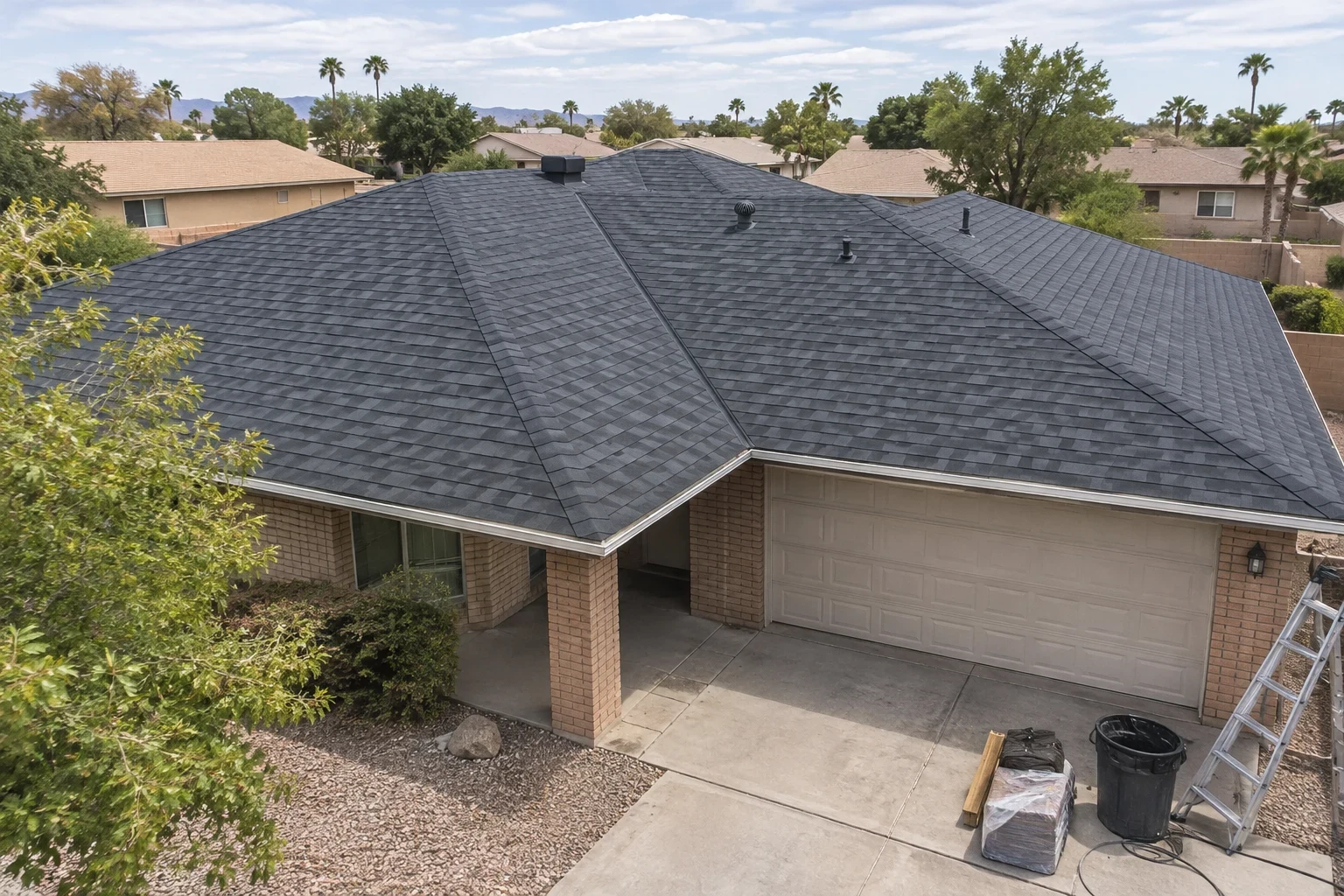
Planning a roof for something new?
Tell us about your build, addition or casita, and we will talk through materials, timing and the details that keep a new roof dry. We serve Youngtown and nearby towns like Sun City, El Mirage and Peoria.