ServicesFlat Roofing
Flat Roofing in Youngtown
A flat roof lives or dies at its seams, edges and drains. We install and rebuild low-slope roofs on homes, carports and patio covers with the attention those spots need, so water leaves the roof and the sun does not open it back up.
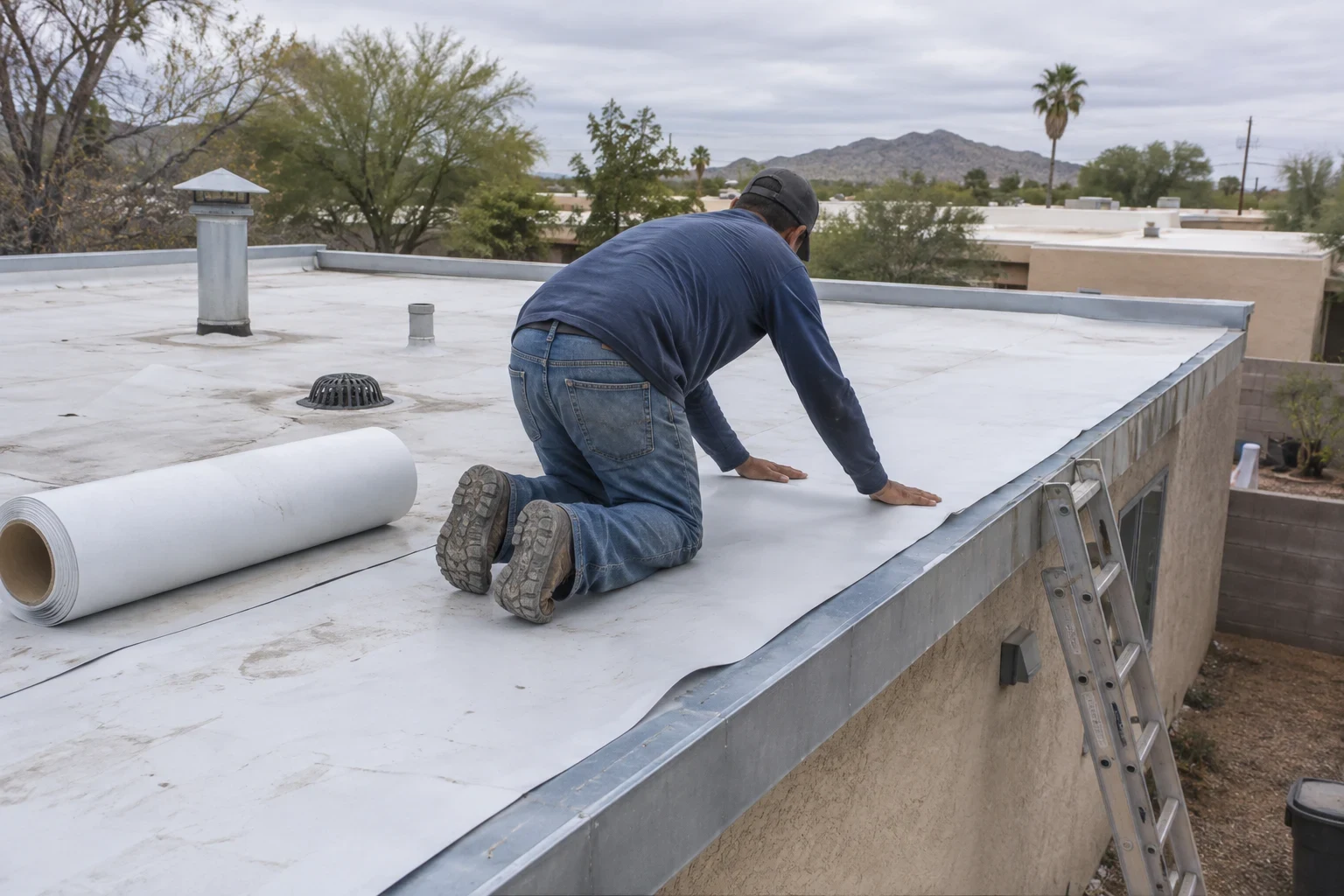
Flat roofs fail at the edges, not the middle
Most flat roof leaks start where the membrane meets something else: a parapet wall, a scupper, an AC stand, a vent pipe. The open field of the roof usually holds up fine. That is why we spend most of our time on the details, sealing every termination, lapping every seam the right direction and making sure the roof has enough pitch to push water toward the drains.
We work with modified bitumen cap sheet and single-ply membranes, and we will tell you plainly which one suits your roof. If spray foam is the better fit, our foam roofing page explains that option, and we can talk through both on the same call.
Summer sun here bakes a dark flat roof hard enough to shrink and crack poorly sealed seams, and heavy downpours find any low spot. A roof built with both in mind simply lasts longer.
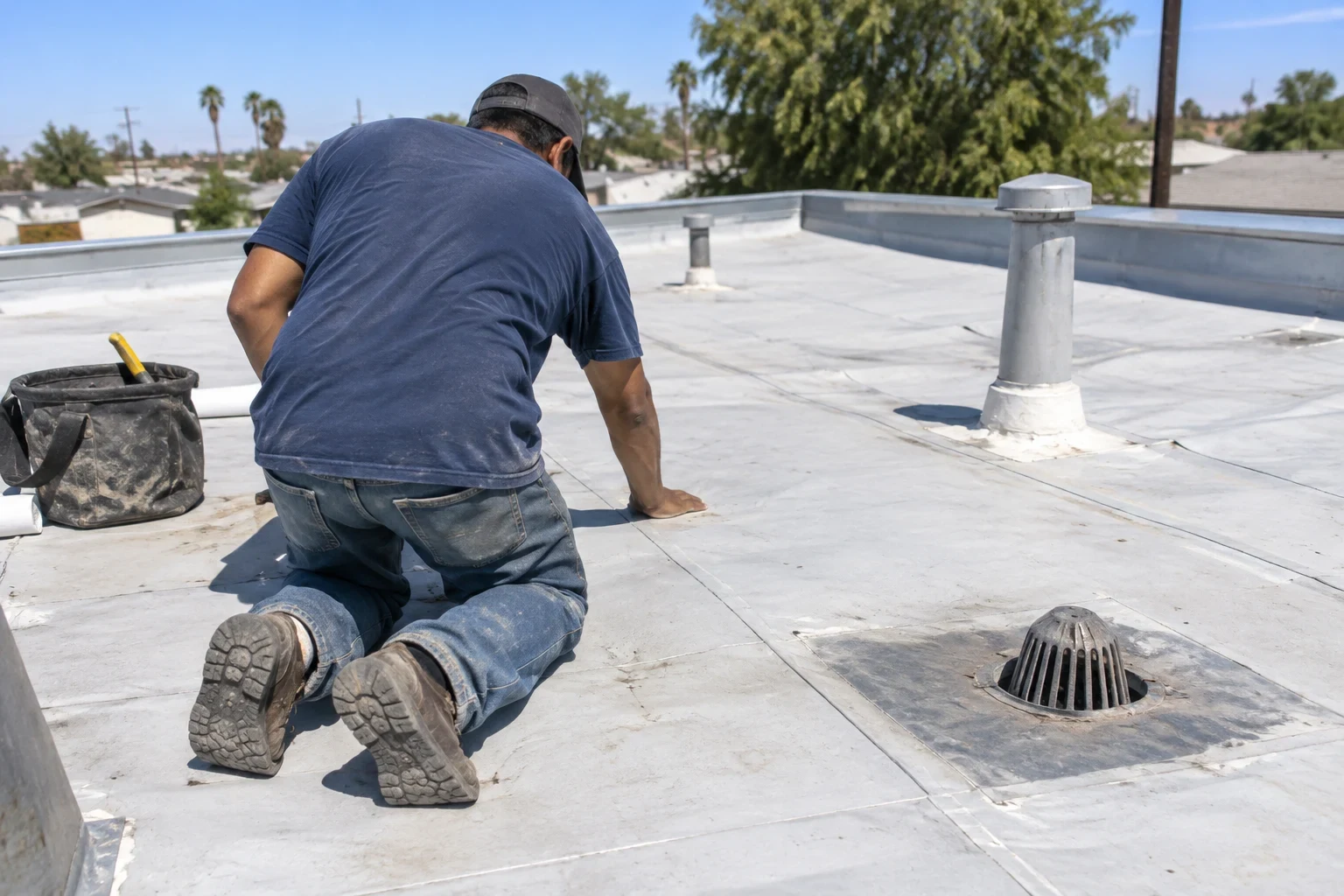
What our flat roofing work includes
- 01
Removal down to sound decking
When the old layers have to go, we take them off and look at the wood underneath. Soft or water-stained sheathing gets replaced before anything new goes down.
- 02
Drainage correction
Water that sits more than a couple of days after rain is a problem. We add tapered insulation or crickets to steer it toward scuppers and drains instead of letting it pond.
- 03
Membrane installation
Cap sheet laps are set fully into the layer below with no dry gaps, then checked by hand. Single-ply seams are heat-welded and probed along their length so a weak spot is caught on the day, not in August.
- 04
Parapet and wall flashing
We run the membrane up the wall, secure it with termination bar and cover it with counterflashing so water cannot get behind it.
- 05
Penetrations and equipment curbs
Pipes, vents and AC or cooler stands each get their own flashing detail. These small openings are where many flat roofs start leaking first.
- 06
Cleanup at the end of each day
Debris goes into the dumpster, nails are swept from the yard and driveway, and your home is left closed up and dry overnight.
Questions about Flat Roofing?
Call(623) 303-9192Signs your flat roof needs attention
Water that stays after rain
Puddles still sitting two days after a storm mean the roof has sagged or never drained well. Standing water speeds up wear on any membrane.
Blisters and bubbles
Raised pockets in the surface usually mean trapped moisture or a lost bond. They tend to split once the heat works on them.
Cracked or bare cap sheet
When the granules wash off and the black layer shows through, the sun is breaking the roof down directly.
Seams lifting at the edges
Open laps along parapets or at the roof edge let wind-driven rain slip underneath.
Ceiling stains under the low section
Stains in a patio room, carport ceiling or back bedroom often trace to a flashing failure, sometimes several feet from where the drip shows.
How a flat roofing job runs
- 1
A look at the roof and a written estimate
We walk the roof, check drainage, seams and flashing, and take photos so you can see what we saw. You get a line-item estimate that explains whether repair or a new roof makes more sense.
- 2
Permit and scheduling
We pull the permit when the job calls for one and set a start date that keeps the roof open for as little time as possible.
- 3
Tear-off and deck repair
Old material comes off in sections. Any damaged decking is replaced and the drainage is built in before the new roof goes on.
- 4
Membrane and detail work
The field goes down first, then every edge, wall and penetration is flashed and sealed. Seams are checked before we call the roof done.
- 5
Final walk-through
We go over the finished roof with you, show you the photos, and leave the yard as clean as we found it.
What moves the cost of a flat roof
No two low-slope roofs price the same, so we quote after seeing yours. The written estimate lists each item separately, and if we find something unexpected under the old roof, we show you before doing extra work.
- Size and shape
- Square footage matters, but so does layout. A roof broken up by walls and level changes takes more detail work than one open rectangle.
- Layers and deck condition
- Several old layers mean more tear-off and disposal. Rotted sheathing adds material and labor.
- Drainage fixes
- Tapered insulation, crickets or new scuppers add to the job, and they are often what makes the new roof last.
- Penetrations and equipment
- Each pipe, vent and equipment stand needs its own flashing. Moving or raising a unit to flash it properly adds time.
- Membrane choice
- Cap sheet and single-ply systems differ in material and labor. We explain the tradeoffs so you can pick with clear information.
Flat roofing questions
Will a roof coating fix my flat roof, or does it need to come off?
It depends on what is under the surface. When the membrane is still well bonded and dry, a coating is a fair way to stretch its life a few more years. If we find blisters, wet insulation or laps pulling loose, a coating just hides the problem until the next hot summer, and we will tell you that straight.
Is some ponding normal on a flat roof?
A few shallow puddles that dry up within a day or two after rain are expected. Water still standing several days later usually points to a sagging deck or a roof that was never sloped correctly, and it wears the membrane out early. Correcting the drainage is often part of what we recommend.
Which is better, modified bitumen or single-ply?
Either one holds up when the seams and edges are done with care. Cap sheet handles foot traffic well around AC and cooler equipment, and single-ply reflects more of the sun's heat. We look at how your roof gets used and how it drains before we suggest one.
Who stands behind the work once it is done?
We do. Roofing Youngtown is an Arizona KB-2 licensed contractor, and the flat roofs we install come with a 10-year labor warranty covering our workmanship.
Do you take flat roofing jobs beyond Youngtown?
Yes. We work on flat roofs for homes in Sun City, El Mirage, Peoria, Surprise and other nearby West Valley communities.
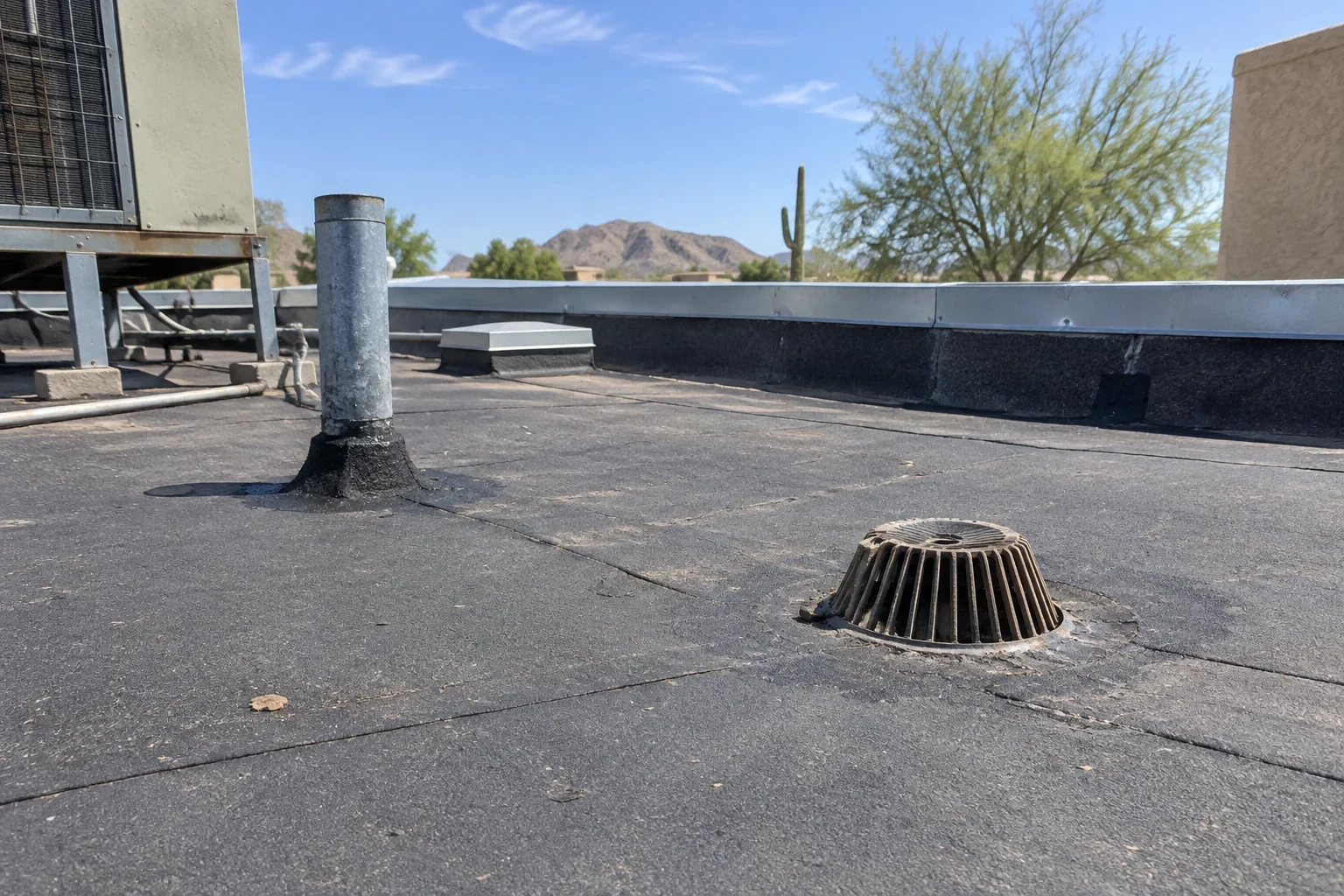
Let's get your flat roof draining right
Describe the puddles, stains or worn spots you have noticed, and we will find a time to come out and check every seam and edge. Afterward you get a written estimate that lists each item so nothing comes as a surprise.